For businesses selling complex solutions to senior decision-makers, content has to do more than keep marketing channels active. It needs to demonstrate a genuine understanding of the commercial, operational and human issues shaping the client’s world, while giving prospective customers a credible reason to engage with the business.
This becomes particularly important when the market is changing quickly. Weak content simply comments on developments that the audience already understands; strong thought leadership identifies where the conversation is going, finds the evidence that matters and connects emerging issues to the company’s proposition without forcing the sales message.
In this case, I was brought in to support Aura Futures during the first UK lockdown in 2020. Aura had recently been conceived as an integrated workspace transformation specialist, bringing together existing companies with significant history and expertise in managed print, digital signage, audiovisual technology, collaboration and connected workspaces.
The timing was extraordinary. Aura’s proposition centred on helping organisations create more integrated physical and digital workspaces, just as businesses around the world urgently needed to enable remote working and reconsider where, how and why work was done.
The opportunity was substantial, but so was the content challenge. Hybrid working, digital transformation, employee experience and the future of the office had suddenly become mainstream subjects.
The challenge was to establish a distinctive, evidence-led point of view within a rapidly expanding – and increasingly crowded – business conversation, while speaking credibly to sophisticated audiences that included C-suite leaders, CIOs, CTOs, workplace and facilities teams, HR leaders, procurement professionals and other senior decision-makers.
Building a thought-leadership platform from the market outwards
Across a number of years, my remit extended beyond responding to detailed writing briefs. I was regularly tasked with considering the broader content question: what issues were occupying Aura’s prospective clients, what new evidence was emerging and where did the business have a credible and commercially relevant point of view?
I regularly proposed content angles and themes, drawing on developments in the business media, research from management consultancies and professional services firms, and academic work into workplace behaviour. Typical sources might include McKinsey, PwC, Deloitte, Microsoft, JLL, CBRE and Harvard Business Review, as well as research and webinars from the University of Leeds Workplace Behavioural Research Centre – only the most authoritative viewpoints were worth drawing together, given the nature of the target audiences.
The effects of the global pandemic meant tracking the debate as it evolved rather than waiting for topics to become established marketing themes. The questions changed rapidly: whether remote working could maintain productivity; how hybrid policies should be developed; what the office was now for; how organisations could protect culture and equity across a dispersed workforce; and how workspace data, technology and real estate decisions could support wider business objectives.
My role was to identify the strongest angles, interrogate the available evidence and turn complex, sometimes contradictory thinking into a clear narrative that Aura could credibly own.
Research-led content for sophisticated audiences
For senior audiences responsible for significant technology, workplace and real-estate decisions, superficial commentary would not have built credibility. Simply collating statistics or repeating fashionable phrases was not enough.
The content therefore needed to combine accessibility with intellectual substance. It had to draw together authoritative sources, acknowledge the complexity of the issue and then make the findings commercially useful by connecting them to decisions around resilience, productivity, talent, culture, security, sustainability, cost and organisational performance.
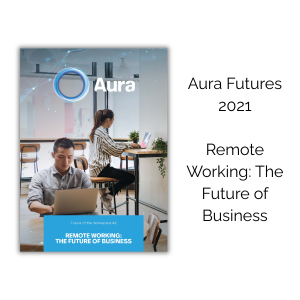
For example, one early white paper, Remote Working: The Future of Business, examined not only the rapid adoption of homeworking, but its implications for talent acquisition, cyber security, HR policies, pay, employee equity and the integration of physical and digital workspaces.
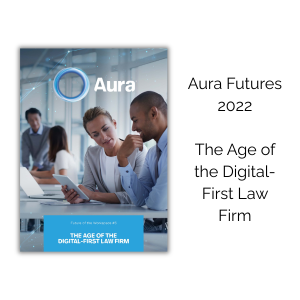
A later sector-specific report, The Age of the Digital-First Law Firm, translated the wider proposition for a particularly discerning and risk-aware audience. It explored changing client expectations, competition for talent, information security, paper-light working, office reconfiguration and the need to combine digital efficiency with the relationship-building culture of legal services.
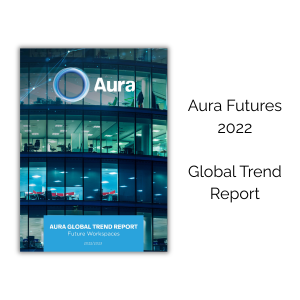
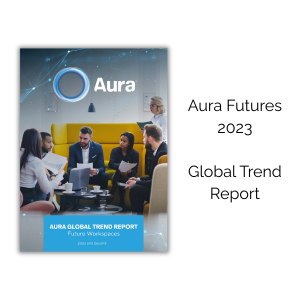
Annual global trend reports took a broader view, identifying and developing themes such as people-centric workspace design, the changing role of IT, data-led decision-making, organisational culture, talent, carbon reduction and the continual evolution of hybrid-working policies.
The point was never simply to summarise research. Each piece needed to provide a coherent interpretation of what the evidence meant for Aura’s prospective clients and establish a logical bridge between the market challenge and the company’s expertise.
Creating one strategic narrative across multiple formats
The longer reports provided a foundation for a much wider content programme. Over the course of the relationship, my work included white papers, trend reports, blogs, case studies, award entries, video scripts, presentations, press releases, social media content, email campaigns and newsletters.
The objective was not to make every format repeat the same message. Each channel had a different role.
A substantial report could demonstrate depth of expertise and support lead generation. A blog might explore one part of the argument in a more timely or accessible way. An email campaign could turn that thinking into a focused reason to engage. Social content could surface an individual insight, while presentations and video scripts helped Aura’s senior team communicate the proposition in their own voices.
This approach also allowed strong ideas to work harder. The research and thinking invested in a substantial thought-leadership asset could inform multiple pieces of content without becoming repetitive, creating consistency across the brand while adapting the emphasis for different sectors, audiences and stages of the buying journey.
Communicating with prestigious organisations in mind
Aura’s client portfolio boasts such impressive names as the University of Oxford, Investec, Stephenson Harwood, Diageo, SOAS and Superdrug. Its content therefore needed to feel credible in the context of complex organisations with established technology estates, multiple stakeholder groups and high expectations of both evidence and delivery.
This type of target market influenced not only the level of research, but the way the proposition was expressed. The content generally began with the audience’s operational or strategic challenge rather than with individual products; technology was positioned as an enabler of broader outcomes: improving collaboration, reducing friction, managing risk, strengthening resilience, supporting culture or making better use of space and resources.
This helped Aura speak to senior prospects on their own terms. Instead of presenting a collection of technical capabilities, the content showed how its integrated expertise could support decisions that mattered at organisational level.
Providing continuity as the business evolved
Over the course of a long-term relationship, I worked with senior and marketing leaders across the business, providing continuity as Aura, its proposition and its priorities evolved.
This continuity had practical value. I retained a detailed understanding of how the proposition had developed, which messages and subjects had already been explored and how the company’s tone had evolved. This helped maintain continuity in the messaging while allowing the content to adapt to new priorities, capabilities and commercial objectives.
Aura itself was developing throughout this period, moving from a newly created proposition towards a more established workspace transformation business. The content needed to evolve with it: retaining a coherent strategic narrative while reflecting new capabilities, changing market conditions and a more mature understanding of what clients required.
Content strategy that supports complex B2B decisions
The work gave Aura a sustained, evidence-led content platform that could support marketing campaigns, sales conversations, sector targeting, PR activity and leadership communications.
More importantly, it helped Aura develop and maintain a relevant point of view through one of the most significant changes in working life for generations. The content did not simply explain what the business sold, it demonstrated that Aura understood the pressures, evidence and competing priorities its prospective clients were navigating.
For me, this was a strong example of the difference between producing content and shaping a B2B thought leadership content strategy. The value was not simply in the quantity or range of assets created. It lay in identifying which conversations mattered, finding evidence that would withstand scrutiny, establishing where the business had a credible right to contribute and turning that thinking into content with a clear role in a sophisticated B2B buying journey.
“The period Rebecca worked with us at Aura Futures was one of significant change, both for our business and the wider workplace sector. Throughout that time, she helped us make sense of a fast moving and often complex landscape, producing thoughtful content that reflected not only where the market was, but where it was heading. She understood how to balance research, commercial priorities and genuine audience insight, helping us communicate with authority on topics that mattered to our clients. She was a trusted partner throughout that journey and I would happily work with her again.”